

When You Work for Something Beautiful and It Still Dies Anyways
On the endings we never anticipate


The weather in New England has been gorgeous this last week, and I’ve been out in my garden weeding. My rhubarb is going gangbusters, the strawberries are blossoming, and the chives have already gone to seed because I couldn’t keep up with them. Everything’s coming up roses. Well, except the roses.
Five years ago when I bought my house (my first big purchase alone after Rob’s death), the jungle of a backyard included two overgrown rose bushes. Every year, I’ve worked to cultivate those bushes. I’ve pruned them, fed them, even transplanted them three years ago to a place where they would have more space to spread. I delight in the arrival of those roses every June.
Which is why, when I was gardening over the weekend, my heart sank when I saw the bushes. Those two hardy plants were no match for this past winter’s record snowfall. There’s more dead than alive left on both. It seems silly to say that I was sorrowful about this, but I was. I am. I worked so hard on behalf of those roses. Now, they’re more than half dead.
If they’re going to survive, I’m going to have to cut them back and start over. Prune the death away and cross my fingers as I start the process all over again. There’s only one problem: I don’t want to have to do that. I just want the thing that I worked so hard for to live.
As we survey our own lives, they’re filled with so many figurative roses. A job you put your all into, only for things to go south at the office. A friendship or a dating relationship you invested in, only to see it turn out to be less intimate and trusted than you hoped. After the death of your person, it’s felt like a big risk to try anything again, let alone put your heart and soul into it. You’ve risked, hoping for reward. But now, like the half-dead roses in my yard, you’re grieving another loss, another goodbye. You’re left with all of those questions that accompany loss: Did I do right by this? Should I have done something different? Would it have made a difference if I’d given a little more?
When I realized that my years of hard work had been destroyed by a single hard winter season, I was mad. Then I was sad. Then I wondered why everything always seems to go wrong. I envisioned these rose bushes like my life, hard work continually crushed by disasters I didn’t see coming. Yikes! Pump the brakes there, girl!
Yes, sometimes, you work for something beautiful, and it dies anyways. Honestly, this will happen probably a million times in small and big ways throughout your life. You can’t insulate yourself from it after loss, however hard you try. Nonetheless, every investment that we make has value beyond the evident end result the world often uses to gauge success.
It’s not rose-colored glasses analysis to say that those two rose bushes gave me such a great sense of accomplishment as a new solo homeowner. When I wasn’t sure I had it in me to go it alone without Rob, those rose bushes became a symbol of the new life our family was cultivating without him. Rag-tag and in need of care, but hearty all the same.
If I could say that God gave me those roses when I needed them most, can I also say that this same Giver of Good Gifts has the wisdom to swap them out for a different gift I might need in this season? “The Lord gave, and the Lord hath taken away; blessed be the name of the Lord” (Job 1:21, KJ21)
In the last seven years since Rob’s death, I’ve said a lot of goodbyes. I’ve seen a million little deaths — friendships that faded, houses from which we moved, jobs I left, opportunities that didn’t pan out. Some of these things I’ve worked awfully hard for. The grief of these goodbyes is real. It’s painful to see your efforts seemingly evaporate into thin air. It’s frustrating when you’ve already experienced deep sorrow to endure the pinch and poke of smaller pains.
But every goodbye offers an opportunity for self-examination and trust: to confess, to forgive, to reorient, to commit, to trust. These myriad smaller goodbyes actually train us in the art of the bigger ones we’ll inevitably face. Every relationship that fades, every job you leave, every natural ending of graduation or retirement — every goodbye — can help you prepare for the ultimate one.
Here’s how I’m practicing that self-examination with my roses …
I confess … I should have protected my roses for the winter’s inevitable snows and harsh cold. I left things undone that should have been done. I foolishly trusted my luck rather than established wisdom.
I forgive … Myself. The end of last summer was hectic between family life and a super busy podcast production schedule. I let the roses go, but I focused on a lot of other things that mattered more. I forgive myself for dropping the ball here.
I reorient … I’ve learned my lesson. Roses in New England need winter care if they’re going to survive from year to year. These aren’t like the roses I grew in Seattle where snow was an intermittent delight. New location, new expectations, new needs.
I commit … Two commitments appear clearly: commit to preserving what remains and commit to better end-of-season care. I can’t just wing this. Intentionality and a change in behavior is vital if I want to see flourishing.
I trust … Whether my efforts coax forth growth or they fail, I trust that God is teaching me something in this goodbye. He is present, loving, and honest in my failures. He delights to see me grow, even when it’s hard.
I don’t know what your goodbyes are these days, what roses you hoped would grow that the snows of life (or your own poor choices) have crushed. I do know that every grief in this life offers opportunity for growth. Grief possesses a vital chastening power, a reorienting wisdom, and a dependency that drives us continually into the Father’s arms. Because of this, no matter how big or small the goodbye may be, we can trust God is working in it, making and remaking us to better reflect his glory. “For it is God who worketh in you, both to will and to do of His good pleasure” (Philippians 2:13, KJ21)
25 Years Is A Long Time
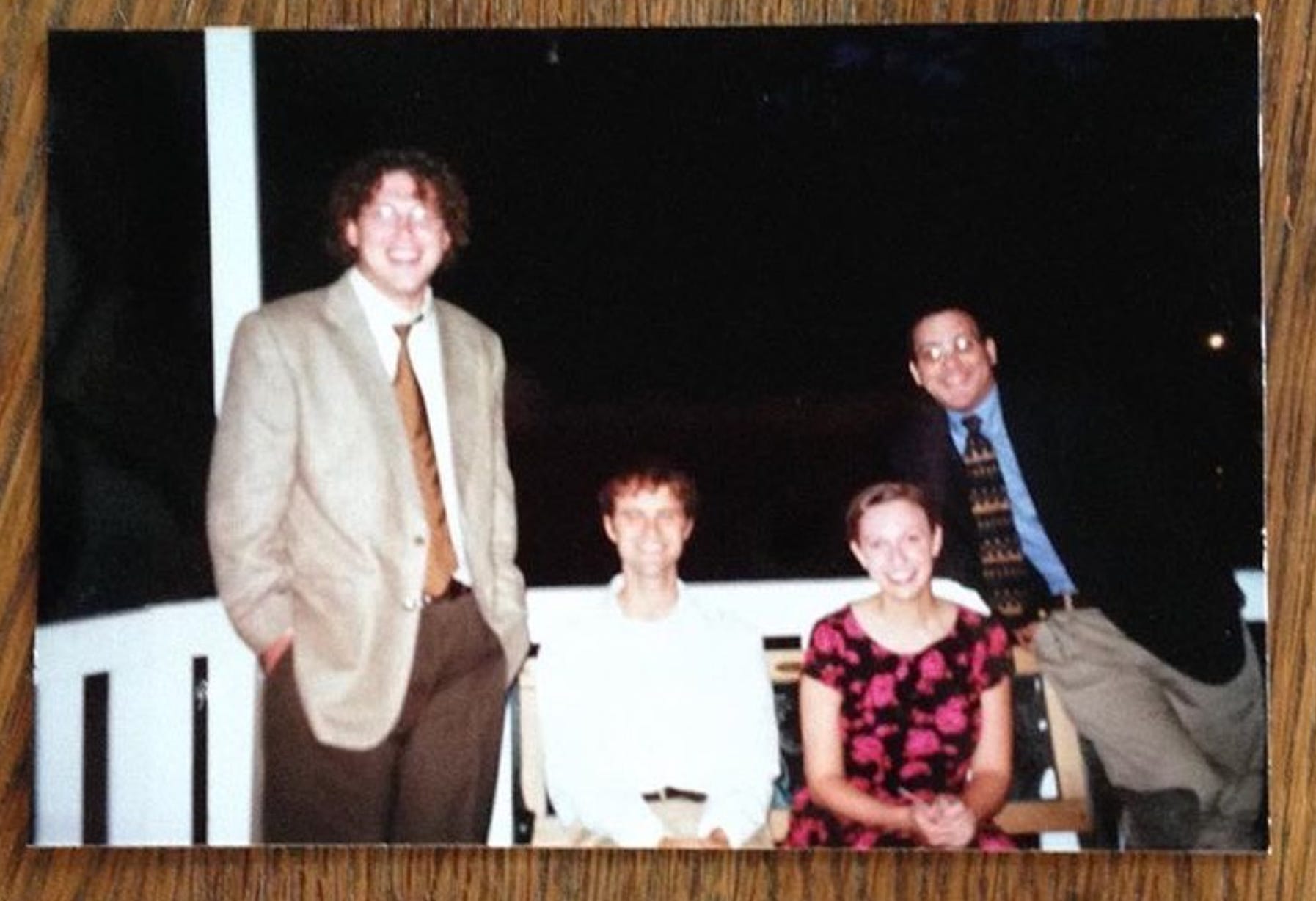
Twenty-five years ago this week, I met Rob at a wedding of mutual friends. I was just a kid in a hasty-purchased dress from TJMaxx. I can’t remember what I intended to wear that night, but I do remember I ran out and got a new dress because I didn’t like what I’d initially chosen. If you’ve seen me prep for a work trip, you know these last minute outfit changes are par for the course when I’m nervous. I don’t remember being nervous to meet Rob, but I clearly must have been!
In our family, the month of May inaugurates a gauntlet of memory-laden months filled with birthdays, anniversaries, death dates, other hard-but-special days. To face these in ways that are both honest and hopeful, we increase communication here in our household. We acknowledge the hard and lean into the joyful. We listen and honor differences. We attempt to be methodical and intentional, knowing that thriving requires conscious effort and care, not just good intentions or hopeful sentiments. We embrace schedules, predictability, and all of the good structures that create mental and physical space to experience whatever emotions surface.
And, we predict joy, not just sadness. Like my hurried wardrobe change that night 25 years ago, we’ve learned that the details we fear often melt away in the happiness of the moment. The work we do in advance provides the scaffolding for joy to emerge naturally at just the right place and time. Anticipatory grief and anxiety may signal us to prepare, but they weren’t made to help us endure. Only hope can do that.
As summer begins, you and I have — no doubt — lots of bittersweet days ahead. How we face them says a lot about how we’ve learned to live with grief and how we walk with God. May we face the truth of loss unflinchingly and cast ourselves daily on the the grace and power of Jesus to do more than we can ask or think.